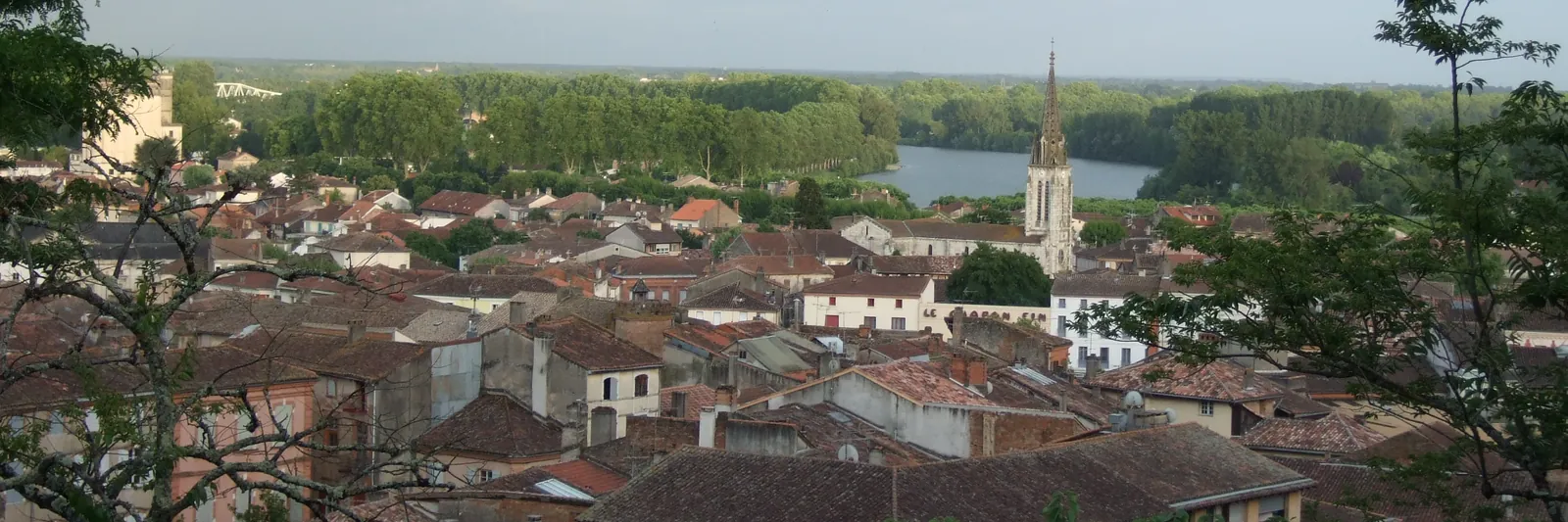
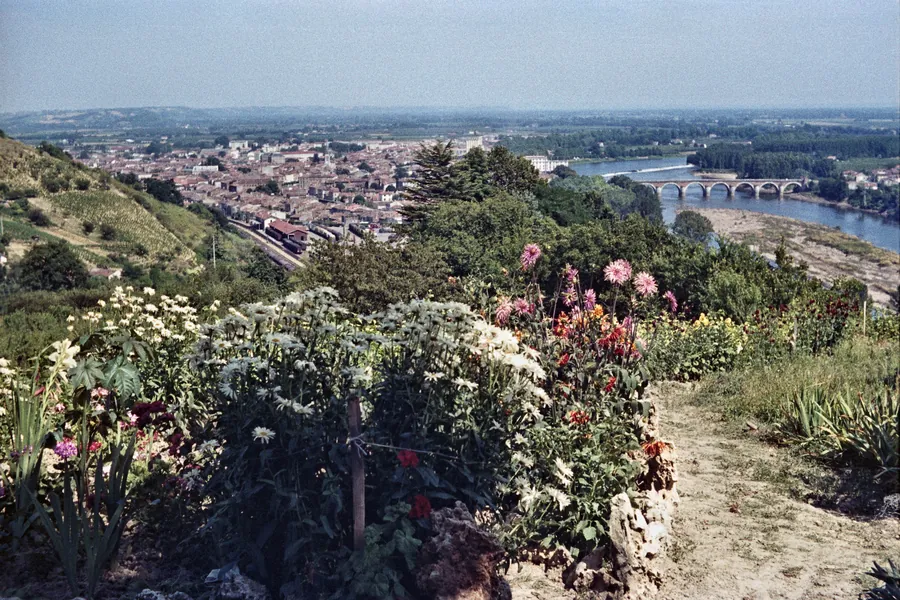
Moissac is one of the landmark stops on the Camino to Santiago de Compostela, on the French route known as the via Podiensis or GR65, which starts in Le Puy-en-Velay and crosses the Quercy region before reaching the Pyrenees and Galicia. Sitting on the banks of the Tarn, a short distance from where the river meets the Garonne, the town has welcomed walkers for centuries thanks to its abbey, its canal and its former river trade. La Petite Lumière — Le Blog is an independent blog about this stage of the Camino: it does not take bookings and is not tied to any single establishment, it simply gathers practical and cultural pointers for pilgrims passing through Moissac.
Why stop in Moissac
The highlight of the stage is the abbey of Saint-Pierre and its Romanesque cloister, part of the "Routes of Santiago de Compostela in France" UNESCO World Heritage listing. The tympanum above the main portal, showing Christ in majesty surrounded by the symbols of the four evangelists, is one of the most studied works of Romanesque sculpture in France. Details on the visit, what to look out for and what to check before going are gathered on the visiting Moissac Abbey and its cloister page. Beyond the monument, the old town still has its half-timbered houses, narrow streets and market square, worth a slow walk before putting the backpack back on.
Finding your way and arriving
Moissac sits where several walking routes cross: the via Podiensis itself, but also connecting paths used by pilgrims coming from Agen, Cahors or Montauban. The Canal latéral à la Garonne and the Cacor canal bridge, which carries the canal over the Tarn, are landmarks visible from far away and help you get your bearings as you come down into the valley. For practical questions about getting to the town, on foot, by bike or by public transport, the getting to Moissac page lists what to check before setting out.
The spirit of the Camino
As on the rest of the via Podiensis, pilgrim hospitality in Moissac follows a long-standing tradition: a credencial stamped from stage to stage, conversations with fellow walkers, and nights spent in gîtes or with local hosts. This human side of the Camino, often as memorable as the heritage along the way, is a thread running through this blog's other articles, alongside practical notes gathered stage by stage.
Where to stay for the night
Moissac offers a range of options for an overnight stop: pilgrim gîtes, bed and breakfasts, and hotels in the town centre. Needs and budgets vary depending on whether you are walking alone, in a group or with children, so it is worth comparing a few addresses and checking availability directly with them for the season. This guide is also available in French, with a fuller version of this hub article on the French home page.
Beyond the abbey
Once the main sights have been ticked off, Moissac rewards a slower look. The towpath along the Canal latéral à la Garonne makes for an easy, flat walk away from the main streets, popular with both pilgrims resting a stiff knee and local cyclists. Nearby, the confluence area where the Tarn meets the Garonne gives a different sense of the landscape than the one seen from the old town's narrow lanes. None of this requires planning in advance; it is simply worth keeping half a day free if your schedule allows it, rather than treating Moissac as a place to pass straight through.
New articles keep being added to this blog on the different sides of the Moissac stage, from heritage to practical notes and route accounts gathered along the Camino - you will find the list below.