Why walk the Camino? Every pilgrim answers differently, and Moissac, with its thousand-year-old abbey, is one of the places on the Via Podiensis where the question surfaces most naturally. Beyond the practical matter of a stage and a bed for the night, stopping in Moissac also means brushing up against something of the Camino's deeper purpose.
A monastic tradition that still shapes the town
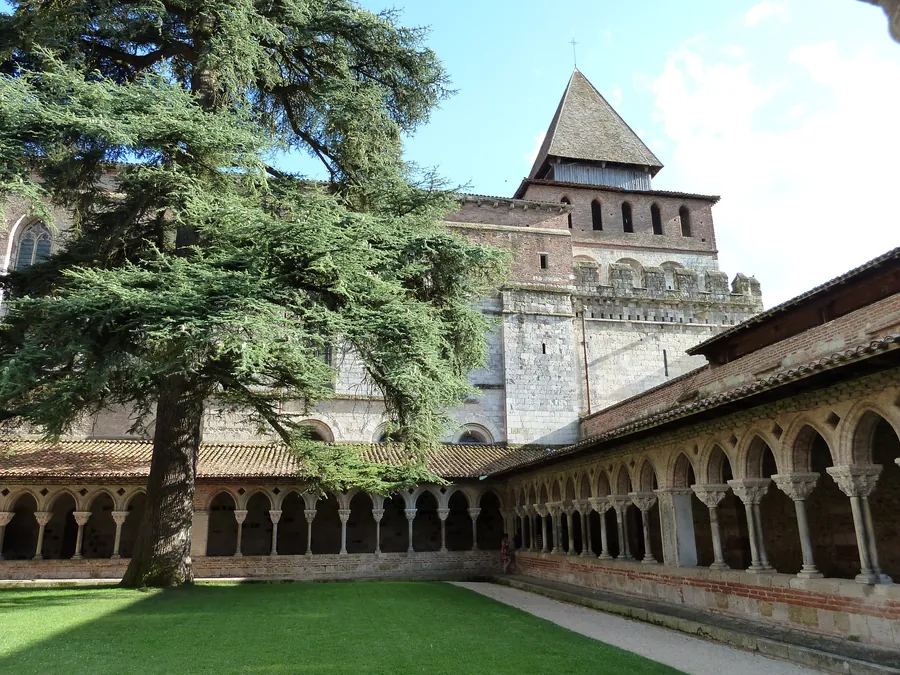
The abbey of Saint-Pierre de Moissac belongs to a long monastic history, shaped first by Benedictine and later Cluniac monks from the early Middle Ages onward. That tradition, built around prayer, silence and welcoming the stranger, shaped the pilgrim route to Compostela for centuries. Monastic life here looks different today, but the abbey and its cloister still carry traces of that history: generations of travellers found shelter, a meal, and sometimes comfort within these walls before setting off again.
Hospitality as a value of the Way
Welcoming the pilgrim, whether a believer or simply a walker, remains a central value of the Via Podiensis. In Moissac and the surrounding villages, it shows up in many small ways: a volunteer-run hospitality house, a kind word at the tourist office, an unplanned conversation with a local curious about where you came from and where you are headed. This quiet hospitality is often what walkers remember longest, far more than the number of kilometres covered in a given day.
The silence of the cloister, a pause within the stage
Sitting for a few minutes in Moissac's Romanesque cloister, away from the noise of the road, offers a different kind of pause than the hurried rhythm of walking. This silence belongs to no single faith: it is shared by the believing pilgrim who comes to pray, the walker searching for meaning, and the simple visitor passing through. This, perhaps even more than the evening's lodging, is where the spirit of the Camino settles in Moissac.
Why people walk: reasons that overlap
Pilgrims rarely walk the Camino for a single reason. Some set out on a journey of faith, others to break from everyday routine, others out of curiosity about history and heritage, or simply for the physical challenge of a long walk. Camino spirituality is therefore not reserved for practising believers: it also shows up among walkers who would not call themselves religious but who recognise, after weeks on the GR65, that something in how they see themselves has shifted.
Reading and sharing the experience of the Way
Many pilgrims enjoy reading or hearing other walkers' accounts before, during or after their own stage. Camino forums, pilgrim blogs and online route journals gather thousands of honest reflections on why walk the Camino and what each person takes from it. For a broader view of the stage itself, our page on visiting Moissac covers the abbey and its surroundings in more detail, and getting to Moissac helps with the practical side of arriving. The home page remains the best overview of what this blog covers about Moissac and the Way.
In brief
- The abbey of Moissac carries a monastic tradition built on prayer, silence and hospitality.
- Hospitality, often quiet and unplanned, remains central to how walkers experience the Via Podiensis.
- The cloister's silence offers a different kind of pause than the rhythm of walking.
- Reasons to walk the Camino vary widely: faith, a break from routine, curiosity, or personal challenge.