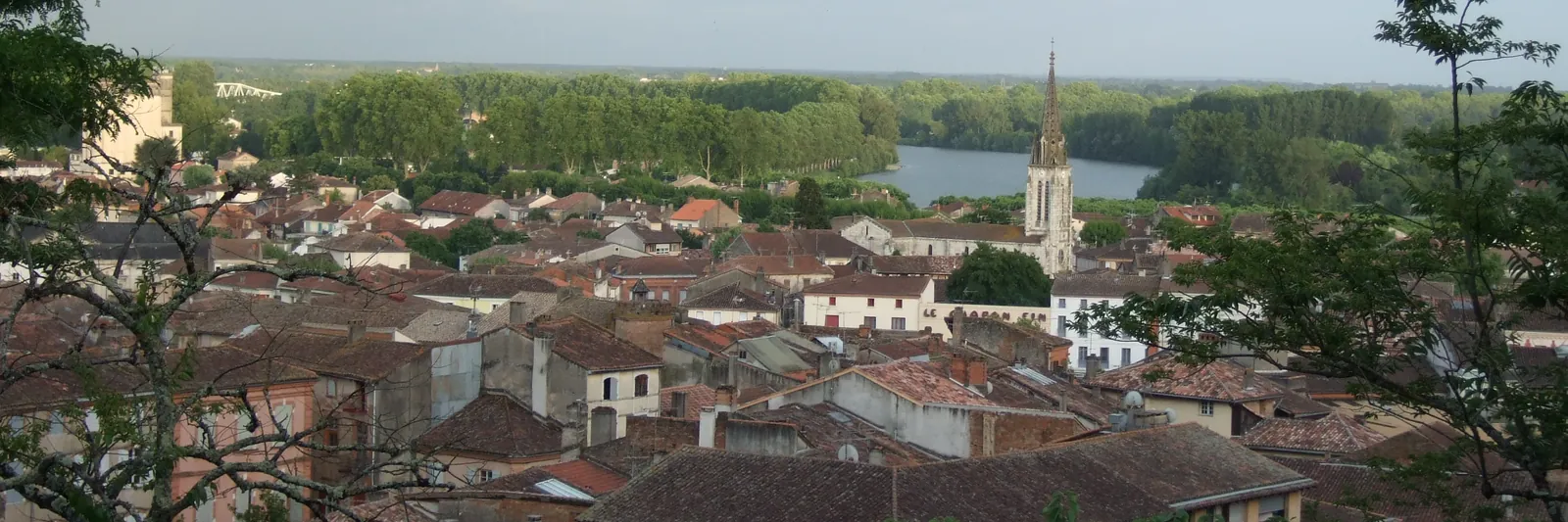
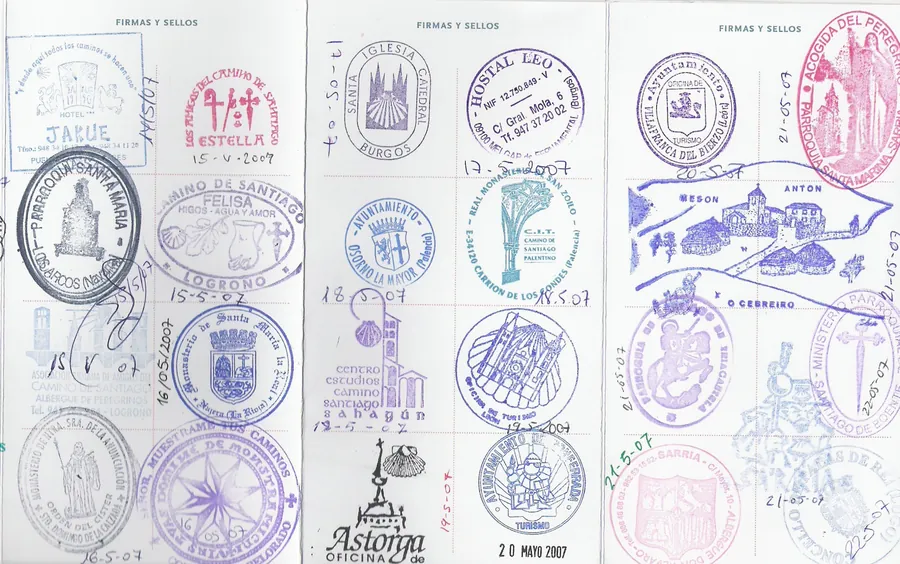
Two small objects travel with almost every pilgrim on the Via Podiensis: the credential, a booklet that records the stages walked, and the guest book, left open on a table in a gîte d'étape, where every traveller can leave a trace of their stay. Both belong to the same tradition - the shared memory of the Camino, built stage after stage by thousands of anonymous walkers.
The pilgrim credential and its stamps
The credential - or pilgrim passport - is stamped at each significant stop along the way: churches, abbeys, tourist offices, and some shops and lodgings each have their own stamp, usually dated and often illustrated with a local motif. This little booklet serves two purposes: it allows pilgrims who wish to do so to receive the Compostela on arrival in Santiago, and, just as importantly, it becomes a personal keepsake, a tangible timeline of the route walked. Our Visit page offers more background on what there is to see around Moissac as you plan your stop.
In Moissac, as in most stages along the Camino, it is generally possible to have a credential stamped at the Saint-Pierre abbey and at the tourist office. Opening hours and exact arrangements vary by season and can change from one year to the next, so it is worth checking directly with Moissac's tourist office before you arrive, rather than relying on information that may be out of date.
The guest book, a tradition of the gîtes d'étape
In a great many gîtes d'étape along the Camino, a guest book is passed from season to season, filled with messages, sketches, dates and names scribbled by walkers from every country. This tradition goes well beyond any single establishment: it has existed for decades in the culture of the Routes to Santiago, where simple, communal lodging has always encouraged this kind of spontaneous sharing. Reading a guest book is often a quick way to glimpse the diversity of pilgrims passing through a given stage - a diversity we look at further on our what's coming up page about the route ahead.
As this blog is not a lodging itself, we do not keep a guest book of our own; we simply document the practice as it generally exists along the Camino. If you are staying in Moissac, ask locally which accommodations keep this tradition alive, and feel free to leave a trace of your own passage too.
Two keepsakes, one shared memory of the Camino
A stamped credential and a signed guest-book entry tell the same route in two different ways: one is an official record of the stages completed, the other keeps the more intimate trace of encounters and shared nights. Together, they form a double record of memory, often leafed through with emotion long after the walk is over. Before setting off, remember to get your own credential and to set aside a few minutes at each stop to find where it can be stamped - a small habit that, repeated over hundreds of kilometres, becomes a genuine diary of the Camino. Start from our home page to explore more of the Moissac stage.
In brief
- The pilgrim credential is stamped at major stops: churches, abbeys, tourist offices, and some lodgings.
- In Moissac, stamping is generally possible at the abbey and the tourist office - check opening hours locally.
- Guest books are a long-standing tradition in gîtes d'étape all along the Camino, not tied to one single place.
- This blog documents these general practices without keeping a guest book of its own.