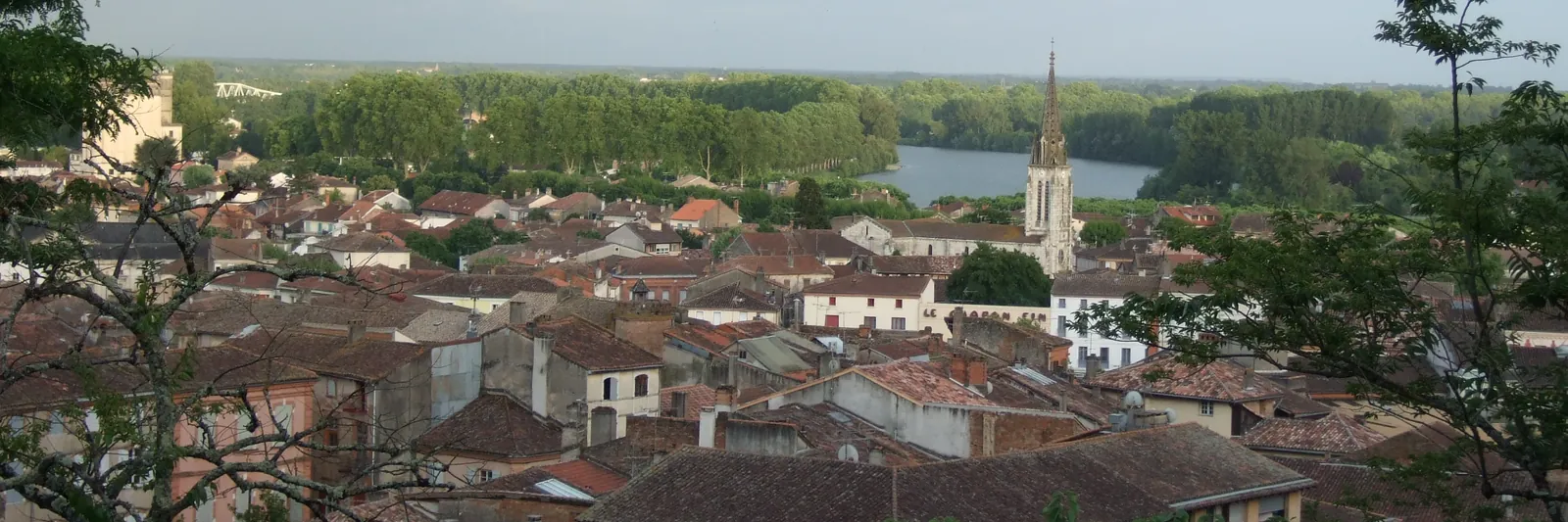
Before stepping inside, the home page situates the abbey within the town and on the Camino de Santiago. This page goes further into the abbey's history and into reading its tympanum, one of the great works of Romanesque sculpture in France.
A Benedictine abbey that joined Cluny
Moissac Abbey traces its origins to the early days of Benedictine monasticism in the region, well before the year 1000. Its most significant growth dates from the 11th century, when Abbot Durand de Bredons, who led the abbey from 1048, affiliated it in 1053 with the powerful Cluniac congregation. This link to Cluny opened a period of prosperity and rebuilding that lasted several generations of abbots: the cloister, dated by an inscription on one of its pillars to the year 1100, and the sculpted portal that followed somewhat later both belong to this same Cluniac momentum.
The portal and its tympanum: a 12th-century project
Art historians place the carving of the portal in the first third of the 12th century, most likely between around 1115 and 1130 - sources agree on this range rather than on a single date, since no consecration inscription survives for the portal itself. The bell-tower porch that now shelters the whole ensemble is later: it was fortified at a time when the region needed defending against unrest and raids, which explains its defensive look next to the refinement of the portal it protects.
Reading the tympanum: Christ in Majesty and a vision of the Apocalypse
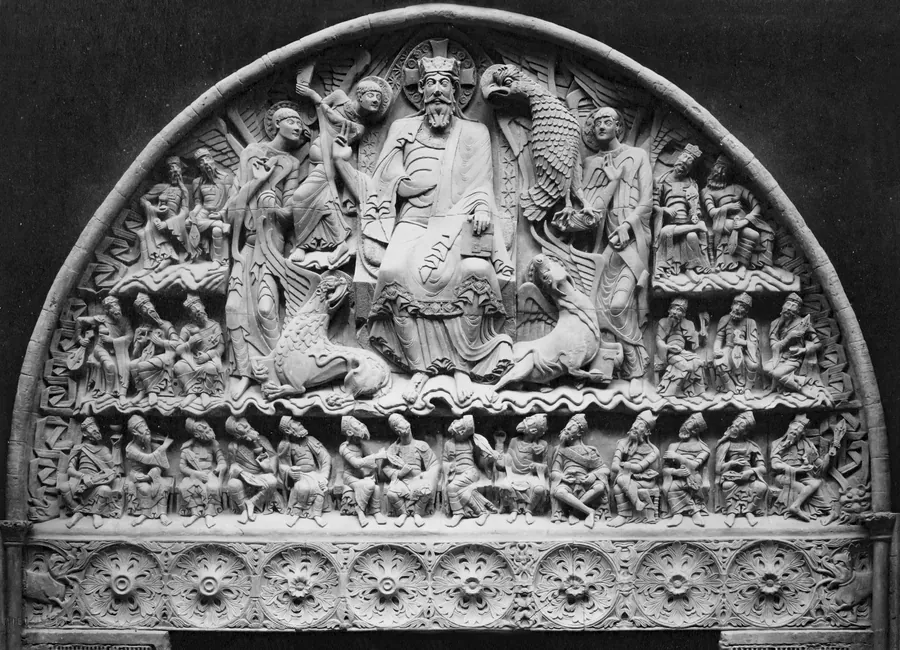
At the centre of the tympanum sits Christ in Majesty, enthroned within a mandorla, one hand raised in blessing. He is surrounded by the four symbols of the evangelists - the angel for Matthew, the lion for Mark, the ox for Luke, the eagle for John - a composition known as the tetramorph, common in Romanesque art to express Christ's presence across the four Gospels. Around and below, elders of the Apocalypse, drawn from the biblical book of Revelation, are arranged in registers, holding musical instruments or cups in a scene of heavenly praise. The lintel beneath carries a frieze of low-relief figures, while the central pier, or trumeau, separating the two doors holds an elongated statue usually identified with a prophet, often named as Jeremiah in commentaries on the portal, together with carved lions and leopards interlaced on its side faces.
Planning your visit
As with the rest of the monument, opening hours, access to the adjoining cloister and any guided visits vary by season: it is worth checking with the Moissac tourist office before coming, especially during religious services, when access to parts of the church can be temporarily restricted. Taking a moment in front of the tympanum before moving on changes how the visit reads: many details of the composition - the folds of the drapery, the gaze of the elders, the difference in scale between figures - are easy to miss if you hurry on to the cloister. For the companion piece on what comes right after the church, see Moissac cloister, with its history and carved capitals.
In brief
- The abbey joined the Cluniac congregation in 1053 under Abbot Durand de Bredons, launching its Romanesque golden age.
- The carved portal dates from the first third of the 12th century, most likely between around 1115 and 1130.
- The tympanum shows Christ in Majesty surrounded by the four evangelist symbols and the elders of the Apocalypse.
- The fortified bell-tower porch is later than the portal it shelters, built for defence rather than decoration.