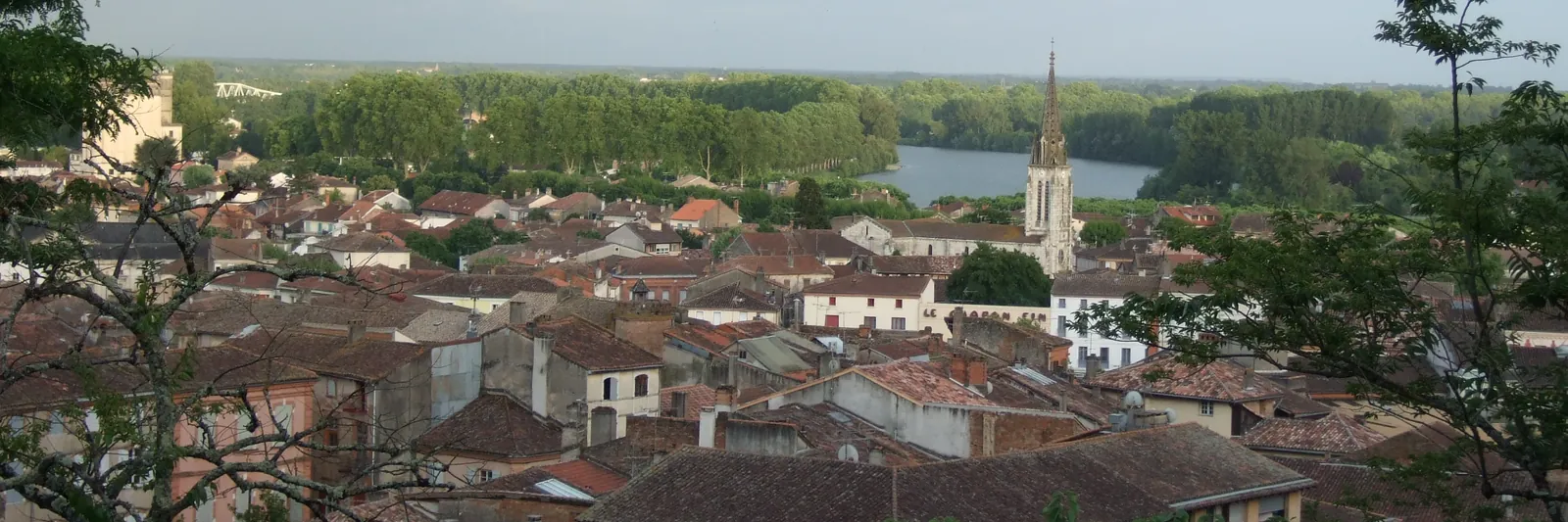
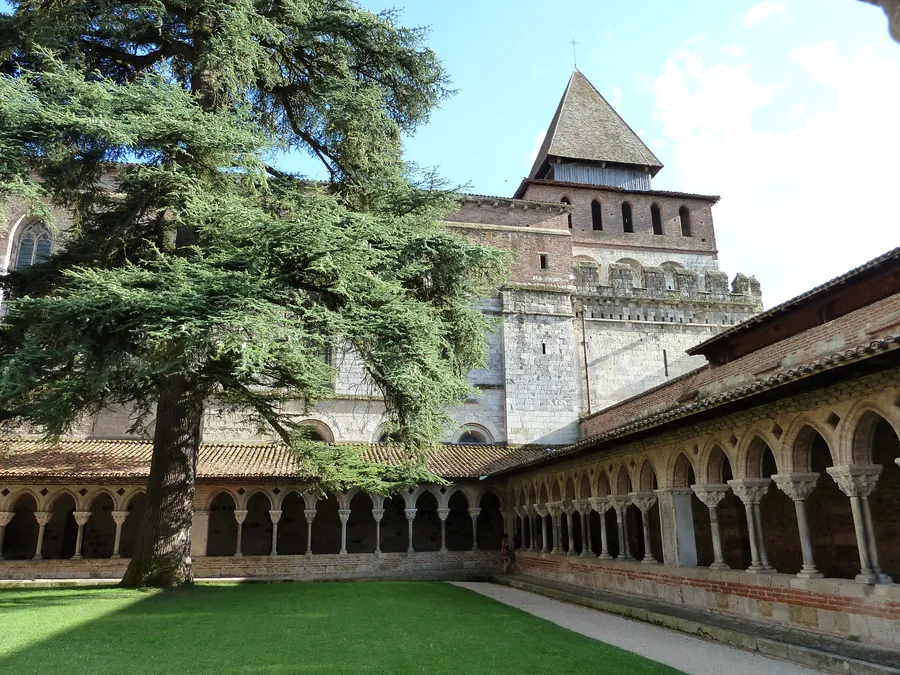
After the abbey church and its sculpted tympanum, the cloister of Moissac is the second major stop on a visit to the abbey. Set behind the church, it is one of the best-preserved Cluniac cloisters of its period anywhere in France, and many pilgrims following the Camino spend as much time here as in the church itself. For background on the wider site before exploring the cloister, the blog's home page is a useful starting point.
A Romanesque cloister dated by its own inscription
The cloister was built at the very end of the 11th century and the beginning of the 12th. Its date is known with unusual precision for a monument this old: a corner pier carries a carved inscription naming the year 1100 and Abbot Ansquitil (sometimes spelled Anscitil), who led the abbey at the time. That makes it one of the rare Romanesque buildings whose construction date can be read directly on the stone, rather than estimated from stylistic comparison with other buildings in the region.
Architecture and carved capitals
Four galleries surround a central garden and rest on an alternation of single and paired columns, carved from the grey and white marble typical of the area. No two capitals are alike: some show biblical scenes, others stylised foliage or geometric interlace. Among the historiated capitals most often discussed by art historians is Daniel in the lions' den, alongside episodes from the New Testament and scenes from the lives of the apostles, arranged along the galleries without a strict narrative order. The corner piers add relief figures of apostles, carved in a style close to that of the neighbouring abbey's tympanum.
Walking the galleries
There is no fixed visiting order: most visitors simply follow the four galleries capital by capital, which makes it easy to compare motifs from one bay to the next. It is worth looking up at the cornices and capital tops too, since some of the carving continues above the capitals themselves. As with the abbey church, opening hours, access conditions and any combined ticket change with the season, so checking with the Moissac tourist office before arriving is sensible, especially outside the main summer months or during services.
Combining it with the abbey
The cloister is usually visited straight after the abbey church and its tympanum, since both form part of the same site listed as UNESCO World Heritage under the Routes of Santiago de Compostela in France. For pilgrims with only an hour or two during their stage in Moissac, planning for both together is the simplest way to see the essentials without rushing before heading back onto the trail. For more on the tympanum and the abbey's history, see Saint-Pierre Abbey in Moissac.
In brief
- The cloister dates to 1100, a year known thanks to a carved inscription naming Abbot Ansquitil on a corner pier.
- Galleries rest on single and paired columns carrying dozens of carved capitals, including the well-known Daniel in the lions' den.
- There is no required visiting order: allow time to compare capitals across the galleries.
- Hours and tickets vary by season - check with the tourist office before visiting.